NAB2008 TO FEATURE U2 3D FILMMAKERS - March 20, 2008
If you're curious how 3D technology comes to life, you'll be able to get all of your questions answered at the NAB2008 conference "where content comes to life." The creators of U2 3D will present "U2 3D: Case Study" alongside other producers and directors who have made 3D films, explaining their process and techniques. There are also a host of other notable guests, including the creative team from the TV show Lost. The conference happens in Las Vegas April 11 - 17 and tickets are available now. nabshow
Ground-breaking. Mind-blowing. "U2 3D" forever changes the way concert films will be made. Bono and The Edge tell us why it's so special
Clips from U2 3D
U2 3D to record: U23dmovie
21.3.08


Bono's Birthday Well 6 - March 17 - May 10 2008
 For the sixth year in a row, the African Well Fund is pleased to announce plans for a fundraising drive to " Build a Well for Bono's Birthday ". From March 17th through May 10th, the African Well Fund invites U2 fans and others who are inspired by Bono's tireless activism on behalf of Africa to make a donation in honor of Bono's birthday on May 10th. Your donation in the amount of $100, $75, $40, or whatever you can afford, will go a long way in helping to provide clean water for the people of Africa. Donations from the five previous campaigns totaled over $110,000 and have been used by our partner Africare to fund well projects in Uganda, Ethiopia, Angola and Zimbabwe. Check the AWF Wells page for more information on our projects. During 2006, two African Well Fund members traveled to Africa to see wells built by previous birthday fundraisers. You can see video from the trip at youtube.com or read the trip blog from AWF's visit to Africa for more information.
afticanwellfund
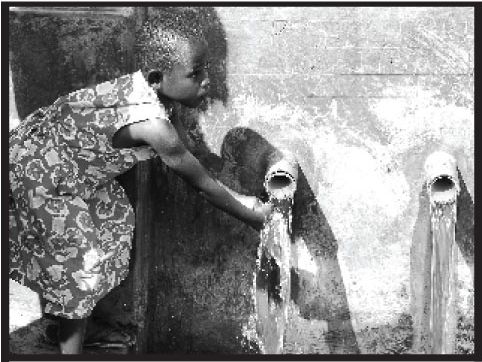 For the sixth year in a row, the African Well Fund is pleased to announce plans for a fundraising drive to " Build a Well for Bono's Birthday ". From March 17th through May 10th, the African Well Fund invites U2 fans and others who are inspired by Bono's tireless activism on behalf of Africa to make a donation in honor of Bono's birthday on May 10th. Your donation in the amount of $100, $75, $40, or whatever you can afford, will go a long way in helping to provide clean water for the people of Africa. Donations from the five previous campaigns totaled over $110,000 and have been used by our partner Africare to fund well projects in Uganda, Ethiopia, Angola and Zimbabwe. Check the AWF Wells page for more information on our projects. During 2006, two African Well Fund members traveled to Africa to see wells built by previous birthday fundraisers. You can see video from the trip at youtube.com or read the trip blog from AWF's visit to Africa for more information.
afticanwellfund
Why would someone toss $1.35m at Wikipedia?Jimbo Wales catches VC from Bono on Mexico City rooftop There's little doubt that anyone with the time and the inclination can overhaul at least a few Wikipedia entries to suit their personal ambitions. All they need is the right friends. Or a little pillow talk. The question is, could someone overhaul the entire encyclopedia? Over the past two years, one man has donated or "lined up" donations totaling more than $1.35m to the charitable organization that runs Wikipedia, dwarfing the contributions of any other donor. And this man is among Silicon Valley's most conspicuous venture capitalists. His name is Roger McNamee, and he runs Elevation Partners, a San Francisco-based VC firm whose partners include Bono, the U2 frontman more famous for pop records than venture capital. In fact, Bono played a significant role in the mysterious pas de deux between Elevation and the Wikimedia Foundation, making nice with Wikipedia co-founder Jimmy "Jimbo" Wales and his wife Christine before a U2 concert in Mexico City more than two years ago. In the beginning, McNamee's donations were made anonymously - at least on official records. But the Elevation Partners connection has long been an open secret among Wikimedia insiders, and last week the secret spilled out onto the web when former Foundation executive Danny Wool posted a few details to his well-read blog. After Jimmy Wales dumped his lover on the "free encyclopedia anyone can edit", and Danny Wool accused the site's Spiritual Leader of mismanaging Foundation funds, many assumed that the The Great Wikipedia Soap Opera had reached its climax. But there's more to come. At the very least, McNamee's involvement with Wikimedia is a puzzle that needs solving. Considering the Foundation's status as a tax-exempt non-profit, a VC would need more than a little sleight of hand to turn it into a personal moneymaker. And if he did, this would surely raise the ire of more than few Wikipedians. Remember: Wikipedia was built almost entirely with free labor. When Bono met Jimbo: According to Danny Wool, Elevation Partners - named for the U2 song - first approached the Wikimedia Foundation in late 2005. Wool took a phone call from a partner named Marc Bodnick.
"There was a period of time where everybody was trying to get in on the Wikipedia action," Wool told us. "Bodnick was really intriguing. He gave me the whole Bono thing, and I thought that was really cool. So I told Jimmy." Wales soon met with Bodnick at Wikimedia's St Petersburg, Florida, headquarters, and later chatted with Roger McNamee in San Francisco. Then, several weeks later, Wales and his wife Christine had dinner with Bodnick and his personal assistant at a steakhouse in nearby Tampa. According to Wool, this was the $1,300 meal that Wales famously asked the Foundation to pay for. In the end, the Foundation did not reimburse Wales for the steakhouse tab. But a few weeks later, on February 15, 2006, Wales and his wife flew to Mexico for that U2 concert, together with Danny Wool and another Wikimedia staffer. And this tab was on Elevation. "They paid for all the expenses," Wool told us. "All of them." That night, the four of them joined Bono for drinks on the roof of their hotel, and at one point the pop icon suggested that Wales dump Wikipedia's volunteer editors and hire professionals. Bono also suggested the Wikimedia foursome meet him for lunch the next afternoon before attending the concert. But in the end, that meeting included only Wales and his wife. "I was all dressed for the lunch with Bono and I was told that Bono only wanted to meet with Jimmy and Christine," Wool said. Non-disclosure: But these weren't the only meetings between Elevation Partners and the Wikimedia Foundation. After the Mexico City trip, Wool claims, the entire Foundation board met with Marc Bodnick, who happens to be the brother-in-law of Sheryl Sandberg, the top Google sales exec who recently took over as Number Two at Facebook. "There was a board meeting in Rotterdam in January 2007, and Bodnick walked in," says Wool, who was present at the meeting - though he was not a board member. "Half the board didn't know who he was, but I said hello. Then everyone else signed a [non-disclosure agreement], and I had to leave." According to Wool, Bodnick also met with the board on several other occasions, and each time there was an NDA. In the meantime, Roger McNamee started donating. During the 2006 fiscal year, he gave about $70,000 in Google stock, and in fiscal 2007 he donated another $286,000 - also in Google stock. When McNamee made his first donation, the foundation did not have a brokerage account, and it was Wool who opened one. All of this stock was sold prior to the end of fiscal 2007. In the months since Wool left the Foundation, McNamee has facilitated additional donations. Foundation executive director Sue Gardner told The New York Times that the Elevation partner "lined up" a $500,000 donation in December and a second $500,000 donation just last week. When we phoned Elevation Partners and spoke to Marc Bodnick, he referred all questions to Roger McNamee and said that McNamee is on vacation. Likewise, we didn't get an answer from the Wikimedia Foundation. But in speaking with The New York Times, Jimmy Wales claimed that Elevation's involvement with the Foundation ended after a single meeting. "It took one meeting for them to realize it was off the table," Wales said. "Certainly there can be no investment in Wikipedia. Wikipedia is a non-profit and always will be." But Wales did acknowledge a personal relationship with McNamee, claiming the venture capitalist acts as "a bit of a mentor in doing fundraising". And McNamee said that his involvement with Wikipedia had nothing to do with Elevation. "I am a Wikipedia volunteer - I help with strategy, fundraising and business development - it has nothing to do with Elevation Partners. And no one should be confused about that," McNamee claimed. Not-for-profit meets profit: Nonetheless, Wool insists that Marc Bodnick met with Wales and the Wikimedia Foundation board several times since that first meeting, and Bono lunched with Wales and his wife in Mexico City, with Elevation footing the Foundation's bill. Judging from conversations with board members, however, Wool does not believe an official deal has been struck. Such a deal would break the law, says Arthur Rieman, of the Los Angeles-based Law Firm for Non-Profits. After all, Wikimedia is a tax-exempt charitable foundation. "As a not-for-profit, you have no investors," Rieman told us. "If a VC is making donations, they may not have any expectations of a return as a matter of law. Otherwise the [non-profit] is not allowed to be tax exempt. "Most of the laws regarding exempt organizations are designed to prevent what the IRS and Congress call private benefit - meaning the assets and activities of the non-profit may not provide any benefit to individuals or companies unless these benefits are incidental or causally related to the operation. For instance, if it's a child welfare agency and kids and their families are benefiting, that's OK." That said, Rieman also points out that there are ways for board members or even a big donor to make money from a non-for-profit. Without a doubt, the Wikimedia Foundation could turn on the profit tap at any time. "In the not-for-profit world, there are always non-profits that make money. If they do not have net income - from whatever sources - they do not survive," Riemen continued. "And many non-profits set up for-profit subsidiaries, or they spin off some of their assets to credit earned income." Precedents include the Mozilla Foundation, which spun off a for-profit company around the Firefox browser. And Rieman points to the example of Minnesota Public Radio (MPR), which built a for-profit for Garrison Kellor's Prairie Home Companion, passing hefty salaries and compensation plans to MPR executives. The Minnesota attorney general investigated the deal for nearly two years, but eventually let it stand. Yes, McNamee would be scrutinized if he horned in on a deal to commercialize Wikipedia, Rieman says, and he might even face a fine from the IRS. But there might be ways around this. "It would be dubious. But lawyers make many interesting decisions." Whether or not McNamee is interested in making money from Wikipedia - for himself or for someone else - the facts remain: He's donated a hefty wad to the Foundation, and he has the ear of Jimmy Wales. The Willypedia Affair shows that Wales is willing to violate Wikipedia's mission in favor of a personal relationship. And this particular personal relationship is backed by more than $1.35m. Update:
Our story originally said that Roger McNamee recently made two donations of $500,000 to the Wikimedia Foundation. The Foundation has now responded to us, and it says this is incorrect. McNamee merely facilitated these donations, "introducing" the Foundation to the donors.
theregister
"There was a period of time where everybody was trying to get in on the Wikipedia action," Wool told us. "Bodnick was really intriguing. He gave me the whole Bono thing, and I thought that was really cool. So I told Jimmy." Wales soon met with Bodnick at Wikimedia's St Petersburg, Florida, headquarters, and later chatted with Roger McNamee in San Francisco. Then, several weeks later, Wales and his wife Christine had dinner with Bodnick and his personal assistant at a steakhouse in nearby Tampa. According to Wool, this was the $1,300 meal that Wales famously asked the Foundation to pay for. In the end, the Foundation did not reimburse Wales for the steakhouse tab. But a few weeks later, on February 15, 2006, Wales and his wife flew to Mexico for that U2 concert, together with Danny Wool and another Wikimedia staffer. And this tab was on Elevation. "They paid for all the expenses," Wool told us. "All of them." That night, the four of them joined Bono for drinks on the roof of their hotel, and at one point the pop icon suggested that Wales dump Wikipedia's volunteer editors and hire professionals. Bono also suggested the Wikimedia foursome meet him for lunch the next afternoon before attending the concert. But in the end, that meeting included only Wales and his wife. "I was all dressed for the lunch with Bono and I was told that Bono only wanted to meet with Jimmy and Christine," Wool said. Non-disclosure: But these weren't the only meetings between Elevation Partners and the Wikimedia Foundation. After the Mexico City trip, Wool claims, the entire Foundation board met with Marc Bodnick, who happens to be the brother-in-law of Sheryl Sandberg, the top Google sales exec who recently took over as Number Two at Facebook. "There was a board meeting in Rotterdam in January 2007, and Bodnick walked in," says Wool, who was present at the meeting - though he was not a board member. "Half the board didn't know who he was, but I said hello. Then everyone else signed a [non-disclosure agreement], and I had to leave." According to Wool, Bodnick also met with the board on several other occasions, and each time there was an NDA. In the meantime, Roger McNamee started donating. During the 2006 fiscal year, he gave about $70,000 in Google stock, and in fiscal 2007 he donated another $286,000 - also in Google stock. When McNamee made his first donation, the foundation did not have a brokerage account, and it was Wool who opened one. All of this stock was sold prior to the end of fiscal 2007. In the months since Wool left the Foundation, McNamee has facilitated additional donations. Foundation executive director Sue Gardner told The New York Times that the Elevation partner "lined up" a $500,000 donation in December and a second $500,000 donation just last week. When we phoned Elevation Partners and spoke to Marc Bodnick, he referred all questions to Roger McNamee and said that McNamee is on vacation. Likewise, we didn't get an answer from the Wikimedia Foundation. But in speaking with The New York Times, Jimmy Wales claimed that Elevation's involvement with the Foundation ended after a single meeting. "It took one meeting for them to realize it was off the table," Wales said. "Certainly there can be no investment in Wikipedia. Wikipedia is a non-profit and always will be." But Wales did acknowledge a personal relationship with McNamee, claiming the venture capitalist acts as "a bit of a mentor in doing fundraising". And McNamee said that his involvement with Wikipedia had nothing to do with Elevation. "I am a Wikipedia volunteer - I help with strategy, fundraising and business development - it has nothing to do with Elevation Partners. And no one should be confused about that," McNamee claimed. Not-for-profit meets profit: Nonetheless, Wool insists that Marc Bodnick met with Wales and the Wikimedia Foundation board several times since that first meeting, and Bono lunched with Wales and his wife in Mexico City, with Elevation footing the Foundation's bill. Judging from conversations with board members, however, Wool does not believe an official deal has been struck. Such a deal would break the law, says Arthur Rieman, of the Los Angeles-based Law Firm for Non-Profits. After all, Wikimedia is a tax-exempt charitable foundation. "As a not-for-profit, you have no investors," Rieman told us. "If a VC is making donations, they may not have any expectations of a return as a matter of law. Otherwise the [non-profit] is not allowed to be tax exempt. "Most of the laws regarding exempt organizations are designed to prevent what the IRS and Congress call private benefit - meaning the assets and activities of the non-profit may not provide any benefit to individuals or companies unless these benefits are incidental or causally related to the operation. For instance, if it's a child welfare agency and kids and their families are benefiting, that's OK." That said, Rieman also points out that there are ways for board members or even a big donor to make money from a non-for-profit. Without a doubt, the Wikimedia Foundation could turn on the profit tap at any time. "In the not-for-profit world, there are always non-profits that make money. If they do not have net income - from whatever sources - they do not survive," Riemen continued. "And many non-profits set up for-profit subsidiaries, or they spin off some of their assets to credit earned income." Precedents include the Mozilla Foundation, which spun off a for-profit company around the Firefox browser. And Rieman points to the example of Minnesota Public Radio (MPR), which built a for-profit for Garrison Kellor's Prairie Home Companion, passing hefty salaries and compensation plans to MPR executives. The Minnesota attorney general investigated the deal for nearly two years, but eventually let it stand. Yes, McNamee would be scrutinized if he horned in on a deal to commercialize Wikipedia, Rieman says, and he might even face a fine from the IRS. But there might be ways around this. "It would be dubious. But lawyers make many interesting decisions." Whether or not McNamee is interested in making money from Wikipedia - for himself or for someone else - the facts remain: He's donated a hefty wad to the Foundation, and he has the ear of Jimmy Wales. The Willypedia Affair shows that Wales is willing to violate Wikipedia's mission in favor of a personal relationship. And this particular personal relationship is backed by more than $1.35m. Update:
Our story originally said that Roger McNamee recently made two donations of $500,000 to the Wikimedia Foundation. The Foundation has now responded to us, and it says this is incorrect. McNamee merely facilitated these donations, "introducing" the Foundation to the donors.
theregister
Producer is U2's 'gatekeeper of the bedrock' - March 18, 2008 From his work on The Joshua Tree to, more recently, that on How To Build An Atomic Bomb, Daniel Lanois and U2 have a strong and unique bond. Lanois says the relationship is almost other-worldly. "I think we work well together because there's kind of a premonitional force in the room when I work with these guys," he says. "We sense that something might be right but we're not convinced yet and it's still the unknown. It's that unknown that keeps us going. We want to do something original. Bono wants to say something that has never been said before. We know we're going to have to roll up our sleeves, put our thinking caps on and do beautiful work." A recent quote from Bono also described the relationship the band has with both Lanois and fellow producer Brian Eno. "Daniel Lanois, in a certain sense, is about the ancient," Bono said. "And Brian Eno is about the modern, the future, the things that haven't happened." "I'm about the ancient? I'll take that as a compliment," Lanois says with a laugh. "I'm just on a different floor than Eno. He uses his airplane time to build these rhythmic tapestries that he brings to the studio. And we'll often use them as a springboard for building a song. I've got a good barometer for what feels good so anything we do that we carry on with will have a reliable, emotional plateau in it for us to keep working on it. "I will fight for a very soulful bedrock and I won't carry on until we have it. I'll pay special attention to the ingredients that I deem to be viable as soulful. Eno will come in with these incredible electro-beginnings but in the end the bedrock that we end up with, I'm the gatekeeper of the bedrock." edmontonsun
Brian Eno in Rome
Q&A: Film, U2 album keep Daniel Lanois on the go
By Jonathan Cohen - Fri Mar 7, 6:51 PM ET - NEW YORK (Billboard) - In between jet-setting around the globe with Brian Eno to write and record with U2, Daniel Lanois is still finding time to work on his own music. A documentary about his recent experiences in the studio, "Here Is What Is," will have its U.S. premiere March 9 at the South by Southwest Film Festival, and Lanois will play a host of shows in the following days during the music portion of the Austin, Texas, conference. The artist also has launched his own digital download store at RedFloorRecords.com, offering a deluxe CD/DVD of "Here Is What Is," his solo albums and a wealth of unreleased material. Just before leaving for Dublin to finish U2's new album, Lanois spoke to Billboard about his myriad projects.
Q: Your "Omni Series" will offer six albums' worth of unreleased music online. What inspired the idea?
Daniel Lanois: "Well, we can be fast and furious. I can record something at midnight and have it available at breakfast, and the money is in PayPal by 5. 'Omni' will accommodate my spontaneous offerings. We're going to put out a steel guitar record in May or June. Then, there's 'Midnight,' which is spooky, late-night stuff; a little more psychedelic and whacked-out. Another one I really love -- about a year ago, I did the music for a Pixies documentary. That little body of work has a nice feeling to it. So I called up all the members of the Pixies and asked if they minded if I could put it out, and they said sure. Finally I have my corner store. I've been dreaming about it since I was a little kid."
Q: You're selling the music as high-quality WAV files. Is there an added cost to you to do this?
Lanois: "No, we offer full fidelity for the same price. We're proud of that. We dedicate ourselves to quality. Part of the deterrent is the receiving end -- you need a high-grade Internet hookup. If you're in the boonies, it might be confusing. And it takes longer to download. It's not as quick and easy -- not quite the TV dinner."
Q: You were able to regain the digital rights to your solo albums. Any advice for acts trying to accomplish that?
Lanois: "If somebody wants to own your master, that's fine, but not for more than four years. That way, everybody has their party and everybody makes their money. I don't think it's necessary for artists to give up master rights forever, because then you become a catalog feather in the cap for a company that just wants to sell its content. It's unfair. I don't think record companies should automatically own your masters for good simply because they've helped you with a campaign. Those days are gone."
Q: Will you be playing any shows in support of "Here Is What Is?"
Lanois: "Our L.A. premiere will be at the Vista (Theatre) on March 27, and Brian Blade and I will play a half-hour set afterward. I don't know that I'll have the time to tour the world this way, but we'll certainly give it a try here in Silver Lake (a section of Los Angeles)."
Q: Besides U2, have you found time for other producing?
Lanois: "I've been avoiding it, but I've been helping out (alternative rock artist) Rocco DeLuca. He's just around the corner. We're coming out with one track a night, so there's practically an entire album done. He has a beautiful falsetto. It's strikingly pure. I've just never heard anything like it."
Q: U2 -- we'd be remiss if we didn't ask how it was going.
Lanois: "We're going to try and break new sonic ground and deliver a masterpiece. The sleeves are rolled up. Bono is all charged up with a lyrical angle. There's so much material. When you get Eno and I and those guys in the room, before lunch there's like eight things. We've had some exciting beginnings via jam sessions. Now we will pick our favorite beginnings and say, 'OK, that's a lovely springboard. Now what are we trying to say?' The springboards are sometimes melodic, sometimes riff-based, but I can assure you they are exciting."
Reuters/Billboard - yahoo
Nearly an hour Q&A interview with Daniel Lanois
Watch live video from Daytrotter.com on Justin.tv
Brian Eno in Rome
Q&A: Film, U2 album keep Daniel Lanois on the go
By Jonathan Cohen - Fri Mar 7, 6:51 PM ET - NEW YORK (Billboard) - In between jet-setting around the globe with Brian Eno to write and record with U2, Daniel Lanois is still finding time to work on his own music. A documentary about his recent experiences in the studio, "Here Is What Is," will have its U.S. premiere March 9 at the South by Southwest Film Festival, and Lanois will play a host of shows in the following days during the music portion of the Austin, Texas, conference. The artist also has launched his own digital download store at RedFloorRecords.com, offering a deluxe CD/DVD of "Here Is What Is," his solo albums and a wealth of unreleased material. Just before leaving for Dublin to finish U2's new album, Lanois spoke to Billboard about his myriad projects.
Q: Your "Omni Series" will offer six albums' worth of unreleased music online. What inspired the idea?
Daniel Lanois: "Well, we can be fast and furious. I can record something at midnight and have it available at breakfast, and the money is in PayPal by 5. 'Omni' will accommodate my spontaneous offerings. We're going to put out a steel guitar record in May or June. Then, there's 'Midnight,' which is spooky, late-night stuff; a little more psychedelic and whacked-out. Another one I really love -- about a year ago, I did the music for a Pixies documentary. That little body of work has a nice feeling to it. So I called up all the members of the Pixies and asked if they minded if I could put it out, and they said sure. Finally I have my corner store. I've been dreaming about it since I was a little kid."
Q: You're selling the music as high-quality WAV files. Is there an added cost to you to do this?
Lanois: "No, we offer full fidelity for the same price. We're proud of that. We dedicate ourselves to quality. Part of the deterrent is the receiving end -- you need a high-grade Internet hookup. If you're in the boonies, it might be confusing. And it takes longer to download. It's not as quick and easy -- not quite the TV dinner."
Q: You were able to regain the digital rights to your solo albums. Any advice for acts trying to accomplish that?
Lanois: "If somebody wants to own your master, that's fine, but not for more than four years. That way, everybody has their party and everybody makes their money. I don't think it's necessary for artists to give up master rights forever, because then you become a catalog feather in the cap for a company that just wants to sell its content. It's unfair. I don't think record companies should automatically own your masters for good simply because they've helped you with a campaign. Those days are gone."
Q: Will you be playing any shows in support of "Here Is What Is?"
Lanois: "Our L.A. premiere will be at the Vista (Theatre) on March 27, and Brian Blade and I will play a half-hour set afterward. I don't know that I'll have the time to tour the world this way, but we'll certainly give it a try here in Silver Lake (a section of Los Angeles)."
Q: Besides U2, have you found time for other producing?
Lanois: "I've been avoiding it, but I've been helping out (alternative rock artist) Rocco DeLuca. He's just around the corner. We're coming out with one track a night, so there's practically an entire album done. He has a beautiful falsetto. It's strikingly pure. I've just never heard anything like it."
Q: U2 -- we'd be remiss if we didn't ask how it was going.
Lanois: "We're going to try and break new sonic ground and deliver a masterpiece. The sleeves are rolled up. Bono is all charged up with a lyrical angle. There's so much material. When you get Eno and I and those guys in the room, before lunch there's like eight things. We've had some exciting beginnings via jam sessions. Now we will pick our favorite beginnings and say, 'OK, that's a lovely springboard. Now what are we trying to say?' The springboards are sometimes melodic, sometimes riff-based, but I can assure you they are exciting."
Reuters/Billboard - yahoo
Nearly an hour Q&A interview with Daniel Lanois
Watch live video from Daytrotter.com on Justin.tv
We 2 share U2 success story - March 16, 2008
Limerick Post, March 16, 2008
John O'Shaughnessy
(They have the date wrong in the first sentence below. U2 won the competition on March 18, 1978.]
Exactly 30 years ago this Saturday, rock band U2 catapulted into what was to become international fame when they were declared winners of Pop Group 78, at Limerick Civic Week, in what was their first public appearance.
The competition was to find the most entertaining pop group or showband.
Michael McNamara, who compered the event at the Stella Ballroom, recalled:
"Limerick launched U2, something that has never been forgotten by Bono, the Edge, Adam Clayton and Larry Mullen. Were it not for Civic Week, they might never have hit the big time.
"In addition to prize money of £500, they received a recording contract with CBS Records -- and the rest is history."
Limerick auctioneer PJ Power, the man responsible for the running of Civic Week, told the Limerick Post; "Discovering U2 will always be on my CV. That was a very special night and another plus for our city."
McNamara told the Post that they had, in fact, entered under the name "Hype."
"I was brazen enough to tell Bono that name was awful, and he replied they were changing it to U2. I told him that was even worse."
There were only 60 people in the Stella for the final, added Michael, "but like Munster's famous win over the All-Blacks, you could find 10,000 to say they were in the Stella the night U2 were discovered."
He described Clayton's bass playing as "phenomenal," and probably swung the balance in their favour.
"Personally, I thought they were not commercial enough at the time, but I was proved to be wrong. In my years as Radio 2 disc jockey, they were the band most in demand.
"That CBS recording contract was their breakthrough. Later, they signed with Island Records."
The judges were Billy Wall of RTE and Jackie Hayden of CBS Records.
Limerick Post staff member Bron O'Loughlin was one of the people who attended the competition. "My friends and I agreed that they were by far the best band on the night -- although we never imagined just how far they would go!"
U2 was not Civic Week's only success story. On the same week, Stocktons Wing made their debut in the city.
In the same year, Limerick was represented in the National Song Contest by Billy Whelan and Don O'Connor.
Also, violinist Joe O'Donnell, a carpenter from Prospect, was unanimously praised for his album Gaodhal's Vision, released worldwide.
© Limerick Post, 2008.
limerickpost
Limerick Post, March 16, 2008
John O'Shaughnessy
(They have the date wrong in the first sentence below. U2 won the competition on March 18, 1978.]
Exactly 30 years ago this Saturday, rock band U2 catapulted into what was to become international fame when they were declared winners of Pop Group 78, at Limerick Civic Week, in what was their first public appearance.
The competition was to find the most entertaining pop group or showband.
Michael McNamara, who compered the event at the Stella Ballroom, recalled:
"Limerick launched U2, something that has never been forgotten by Bono, the Edge, Adam Clayton and Larry Mullen. Were it not for Civic Week, they might never have hit the big time.
"In addition to prize money of £500, they received a recording contract with CBS Records -- and the rest is history."
Limerick auctioneer PJ Power, the man responsible for the running of Civic Week, told the Limerick Post; "Discovering U2 will always be on my CV. That was a very special night and another plus for our city."
McNamara told the Post that they had, in fact, entered under the name "Hype."
"I was brazen enough to tell Bono that name was awful, and he replied they were changing it to U2. I told him that was even worse."
There were only 60 people in the Stella for the final, added Michael, "but like Munster's famous win over the All-Blacks, you could find 10,000 to say they were in the Stella the night U2 were discovered."
He described Clayton's bass playing as "phenomenal," and probably swung the balance in their favour.
"Personally, I thought they were not commercial enough at the time, but I was proved to be wrong. In my years as Radio 2 disc jockey, they were the band most in demand.
"That CBS recording contract was their breakthrough. Later, they signed with Island Records."
The judges were Billy Wall of RTE and Jackie Hayden of CBS Records.
Limerick Post staff member Bron O'Loughlin was one of the people who attended the competition. "My friends and I agreed that they were by far the best band on the night -- although we never imagined just how far they would go!"
U2 was not Civic Week's only success story. On the same week, Stocktons Wing made their debut in the city.
In the same year, Limerick was represented in the National Song Contest by Billy Whelan and Don O'Connor.
Also, violinist Joe O'Donnell, a carpenter from Prospect, was unanimously praised for his album Gaodhal's Vision, released worldwide.
© Limerick Post, 2008.
limerickpost
In the Name of Love: Africa Celebrates U2 - March 14, 2008
(Shout! Factory)
Tom Laskin on Friday 03/14/2008
 Tribute albums that mean to fete pop and rock artists are often well-meaning failures. But this salute to both U2's music and singer Bono's tireless humanitarian work on behalf of the African continent is the rare tribute disc that actually deserves repeated listening. The primary reason for that: None of the African acts involved make any attempt to ape the original. Instead, African stars like Les Nubians, Vieux Farka Touré and Ba Cissoko transplant the Irish rockers' earnest, stadium-swelling rock into their own traditions. The results are always interesting, and at times much more than that.
In Ba Cissoko's hands, "Sunday Bloody Sunday" becomes a cyclical Afro-guitar groove that simmers and burns but avoids U2's predilection for the epic gesture. Taking a different tack on "With or Without You," Les Nubian bring the burbles and bleeps of the disco to a dreamy club track that's more laidback than the original and also far sexier. And for pure soul, you can't beat Tony Allen's falsetto yearning on his buoyant, horn-powered version of "Where the Streets Have No Name." It's utterly different from the Pet Shop Boys' gloriously cool interpretation of the same tune and just as startling.
In terms of songcraft, no one will ever confuse U2 with the Beatles. Even so, In the Name of Love suggests that their songbook deserves much more attention from artists working outside the precincts of modern rock.
A portion of the proceeds from In the Name of Love will benefit the Global Fund, the world's largest financer of the fight against AIDS, tuberculosis and malaria.
thedailypage
Some audio-clips of the album: africacelebration
To buy the album: here
Africa Celebrates U2 On April 1, 2008, Shout! Factory will release In The Name Of Love: Africa Celebrates U2, an album celebrating the music, culture and future of Africa, and an unprecedented musical homage to Bono and U2 for their ongoing humanitarian relief efforts aiding the beloved continent. A portion of the record's proceeds will directly benefit The Global Fund. Interviews with select artists are available upon request.
Produced by Shawn Amos and Paul Heck, In The Name Of Love: Africa Celebrates U2 features Grammy Award-winning/nominated African artists as well as top up-and-coming talents including Angelique Kidjo, Les Nubians, Sierra Leone's Refugee All Stars, Vieux Farka Touré, Vusi Mahlasela and the Soweto Gospel Choir.
Initially inspired by his work in South Africa while running the Quincy Jones Listen Up Foundation, Amos re-entered the music industry with a heartfelt initiative to cultivate greater awareness of the emerging socio-economic success stories happening within many of the country's regions. Amos, a longtime fan of U2, witnessed Bono's direct philanthropic impact via the launch of the ONE campaign and (RED), and his poignant outspoken public commentary on the immediate financial needs facing Africa.
Amos felt it was essential that African musicians unite and collectively share their voices of pride, accomplishment and appreciation for both their native country and icons like Bono who've substantially embraced the fight against the global AIDS crisis, extreme poverty and the spread of malaria. On December 1, 2006 at the World AIDS Day benefit concert at the Brooklyn Academy of Music, Amos approached Red Hot producer Paul Heck about co-producing In The Name Of Love: Africa Celebrates U2. Several notable African artists were performing as part of Heck's live production of Red Hot + Riot: The Music and Spirit of Fela Kuti including Les Nubians, Tony Allen, Cheikh Lô and Keziah Jones. Heck expressed support for the budding project, and quickly became an invaluable partner with his strong ties to various well-established African artists and knowledge of a handful of buzz-worthy upstarts. Together, they consulted with the artists appearing at the World AIDS Day event, bringing Amos's personal dream a step closer to becoming a reality.
"Paul and I wanted to develop an easy entry point for the growing global community where they could get more involved and learn something deeper about Africa," says Amos. "It's really a focus on the key successes of several regions, and the African artists who originate from these areas. It's our goal for the public to learn more about all the good that's happening in Africa. We are trying to garner excitement about the culture, in addition to drawing people toward the struggles of Darfur, etc. This is a project which celebrates Africa!"
12 original interpretations of classic U2 hit songs and some of their more obscure material are featured on In The Name Of Love: Africa Celebrates U2. The collection kicks off with Angelique Kidjo's powerful multilingual cover of the 1991 chart-topper, "Mysterious Ways." Aerosmith's Joe Perry joins Sierra Leone's Refugee All Stars for an upbeat, guitar-driven take on "Seconds," a track from U2's third studio release, War (1983). Rising Malian star, Vieux Farka Touré offers a trancy, Sahara Desert blues-influenced rendition of "Bullet The Blue Sky," an absolute standout performance of one of U2's most-played live in concert tunes. Additional highlights include Les Nubians dubbed-out dancefloor ready version of "With Or Without You," the Soweto Gospel Choir's epic a cappella version of "Pride In The Name Of Love," and Tony Allen's Afrobeat translation of "Where The Streets Have No Name Paul Heck notes that, "I was amazed when we approached the artists of how quickly they chose the songs they wanted to do. Many of them grew up listening to U2, and knew the songs so well."
In The Name Of Love: Africa Celebrates U2
1. Angelique Kidjo "Mysterious Ways"
2. Vieux Farka Touré "Bullet The Blue Sky"
3. Ba Cissoko "Sunday Bloody Sunday"
4. Vusi Mahlasela "Sometimes You Can't Make It On Your Own"
5. Tony Allen "Where The Streets Have No Name"
6. Cheikh Lô "I Still Haven't Found What I'm Looking For"
7. Keziah Jones "One"
8. Les Nubians "With Or Without You"
9. Soweto Gospel Choir "Pride (In The Name Of Love)"
10. Sierra Leone's Refugee All Stars "Seconds"
11. African Underground All-Stars Featuring Chosan, Optimus & Iyeoka "Desire"
12. Waldemar Bastos "Love Is Blindness"
antimusic
(Shout! Factory)
Tom Laskin on Friday 03/14/2008
 Tribute albums that mean to fete pop and rock artists are often well-meaning failures. But this salute to both U2's music and singer Bono's tireless humanitarian work on behalf of the African continent is the rare tribute disc that actually deserves repeated listening. The primary reason for that: None of the African acts involved make any attempt to ape the original. Instead, African stars like Les Nubians, Vieux Farka Touré and Ba Cissoko transplant the Irish rockers' earnest, stadium-swelling rock into their own traditions. The results are always interesting, and at times much more than that.
 In Ba Cissoko's hands, "Sunday Bloody Sunday" becomes a cyclical Afro-guitar groove that simmers and burns but avoids U2's predilection for the epic gesture. Taking a different tack on "With or Without You," Les Nubian bring the burbles and bleeps of the disco to a dreamy club track that's more laidback than the original and also far sexier. And for pure soul, you can't beat Tony Allen's falsetto yearning on his buoyant, horn-powered version of "Where the Streets Have No Name." It's utterly different from the Pet Shop Boys' gloriously cool interpretation of the same tune and just as startling.
In terms of songcraft, no one will ever confuse U2 with the Beatles. Even so, In the Name of Love suggests that their songbook deserves much more attention from artists working outside the precincts of modern rock.
A portion of the proceeds from In the Name of Love will benefit the Global Fund, the world's largest financer of the fight against AIDS, tuberculosis and malaria.
thedailypage
Some audio-clips of the album: africacelebration
To buy the album: here
Africa Celebrates U2 On April 1, 2008, Shout! Factory will release In The Name Of Love: Africa Celebrates U2, an album celebrating the music, culture and future of Africa, and an unprecedented musical homage to Bono and U2 for their ongoing humanitarian relief efforts aiding the beloved continent. A portion of the record's proceeds will directly benefit The Global Fund. Interviews with select artists are available upon request.
Produced by Shawn Amos and Paul Heck, In The Name Of Love: Africa Celebrates U2 features Grammy Award-winning/nominated African artists as well as top up-and-coming talents including Angelique Kidjo, Les Nubians, Sierra Leone's Refugee All Stars, Vieux Farka Touré, Vusi Mahlasela and the Soweto Gospel Choir.
Initially inspired by his work in South Africa while running the Quincy Jones Listen Up Foundation, Amos re-entered the music industry with a heartfelt initiative to cultivate greater awareness of the emerging socio-economic success stories happening within many of the country's regions. Amos, a longtime fan of U2, witnessed Bono's direct philanthropic impact via the launch of the ONE campaign and (RED), and his poignant outspoken public commentary on the immediate financial needs facing Africa.
Amos felt it was essential that African musicians unite and collectively share their voices of pride, accomplishment and appreciation for both their native country and icons like Bono who've substantially embraced the fight against the global AIDS crisis, extreme poverty and the spread of malaria. On December 1, 2006 at the World AIDS Day benefit concert at the Brooklyn Academy of Music, Amos approached Red Hot producer Paul Heck about co-producing In The Name Of Love: Africa Celebrates U2. Several notable African artists were performing as part of Heck's live production of Red Hot + Riot: The Music and Spirit of Fela Kuti including Les Nubians, Tony Allen, Cheikh Lô and Keziah Jones. Heck expressed support for the budding project, and quickly became an invaluable partner with his strong ties to various well-established African artists and knowledge of a handful of buzz-worthy upstarts. Together, they consulted with the artists appearing at the World AIDS Day event, bringing Amos's personal dream a step closer to becoming a reality.
"Paul and I wanted to develop an easy entry point for the growing global community where they could get more involved and learn something deeper about Africa," says Amos. "It's really a focus on the key successes of several regions, and the African artists who originate from these areas. It's our goal for the public to learn more about all the good that's happening in Africa. We are trying to garner excitement about the culture, in addition to drawing people toward the struggles of Darfur, etc. This is a project which celebrates Africa!"
12 original interpretations of classic U2 hit songs and some of their more obscure material are featured on In The Name Of Love: Africa Celebrates U2. The collection kicks off with Angelique Kidjo's powerful multilingual cover of the 1991 chart-topper, "Mysterious Ways." Aerosmith's Joe Perry joins Sierra Leone's Refugee All Stars for an upbeat, guitar-driven take on "Seconds," a track from U2's third studio release, War (1983). Rising Malian star, Vieux Farka Touré offers a trancy, Sahara Desert blues-influenced rendition of "Bullet The Blue Sky," an absolute standout performance of one of U2's most-played live in concert tunes. Additional highlights include Les Nubians dubbed-out dancefloor ready version of "With Or Without You," the Soweto Gospel Choir's epic a cappella version of "Pride In The Name Of Love," and Tony Allen's Afrobeat translation of "Where The Streets Have No Name Paul Heck notes that, "I was amazed when we approached the artists of how quickly they chose the songs they wanted to do. Many of them grew up listening to U2, and knew the songs so well."
In The Name Of Love: Africa Celebrates U2
1. Angelique Kidjo "Mysterious Ways"
2. Vieux Farka Touré "Bullet The Blue Sky"
3. Ba Cissoko "Sunday Bloody Sunday"
4. Vusi Mahlasela "Sometimes You Can't Make It On Your Own"
5. Tony Allen "Where The Streets Have No Name"
6. Cheikh Lô "I Still Haven't Found What I'm Looking For"
7. Keziah Jones "One"
8. Les Nubians "With Or Without You"
9. Soweto Gospel Choir "Pride (In The Name Of Love)"
10. Sierra Leone's Refugee All Stars "Seconds"
11. African Underground All-Stars Featuring Chosan, Optimus & Iyeoka "Desire"
12. Waldemar Bastos "Love Is Blindness"
antimusic
Bono in Berlin - March 11, 2008
Bono lauds Germany's poverty plan

By THE ASSOCIATED PRESS
BERLIN - Bono's got some kind words for Germany.
"This new Germany" is not shy about showing the world what values are worth fighting for, the activist and U2 co-founder said Tuesday. Bono made the remarks after meeting with lawmakers to tell them about efforts to fight poverty and stem the spread of malaria, AIDS and tuberculosis in the developing world.
Speaking to lawmakers, Bono said his visit was aimed at letting them know that using money to fight poverty was helping.
"They should know that their cooperation has had some success," he said, adding that efforts by Debt AIDS Trade Africa and others were producing real results in Africa and elsewhere.
"The good news, help works," Bono said, referring to a 2007 aid package that he said could save up to four million lives in the coming three years. The rock star also praised a debt relief law passed by the government of former Chancellor Gerhard Schroeder, which Bono said let another 29 million children in Africa attend school.
Bono encouraged German lawmakers to continue working toward halving global poverty by 2015 as part of the UN's Millennium Goals program.
"That's why I'm a fan of Germany and why I want to come back," he said.
jam.canoe
I am fascinated by commerce
Interview with Bono, March 17, 2008
Musician and Africa activist Bono talks about poverty, business and consumerism – and about his plans with Adidas.
Q: Bono, for about two years you’ve been trying to get Germany to increase its aid for Africa. What progress has been made in these two years?
A: I wouldn’t say I have made any progress – but WE have. There is a broad coalition of the willing here: from Herbert Groenemeyer (German singer) to Heidemarie Wieczorek-Zeul (German secretary for development). It’s an unusual mixture of people. If we have achieved something, and I know we have, then I’d say the views of German people are on top of my list. 71 percent of the people here are supporting the Millennium Goals. In most other countries people don’t even know what the Millennium Goals are. 83 percent of Germans think that the fight against extreme poverty is important or even very important. This is just incredible. So don’t stop, continue!
Q: Isn’t this trend over already?
A: You cannot stop this. There is something going on in Germany. As an outsider who visits this country sometimes, I see that there is something going on among the people of Germany that is new and fresh. The thing with the (Football/Soccer) World Championship has become a cliché, but it is exactly about this spirit. The shyness about wanting to claim a certain place in this world is ridiculous, this is over. Germany wants to show the rest of the world what this country is about. The way they are dealing with development aid tells a lot about their intellectual values, as well as about their strategic and commercial ideas. I would be very surprised if the German people would allow their government to break their promises.
Q: But Germany hasn’t really provided the amounts of money you’re asking for.
A: In Heiligendamm (G8 summit 2007) we were disappointed, because we couldn’t get Chancellor Merkel and Secretary of Finance Steinbrueck to make any clear decisions about the way they would go until 2010. According to the Millenium Goals, 0.51 percent of the national income should be spent on development aid. Merkel wasn’t ready to make any clear statement, but she promised to work very hard on these numbers. Her contribution at the conference of the Global Fund against Aids, Maleria and TB was significant: The increase of Germany’s contribution to development aid of 750 Million Euro for the year 2008 has led the other leaders to give ten billion Dollars altogether. This is a very remarkable result of German leadership. But: Am I nervous about where this is going? Of course I’m nervous – I wouldn’t be here otherwise. I have a band in a recording studio, waiting for their singer. This is not a joke. I’m not ready yet to pull the emergency brake on Germany. We have pulled the emergency brake on France, on Israel, also Canada …
Q: What does that mean: Pulling the emergency brake?
A: That we’d call the situation an emergency. In an interview I’d call on the people to go to the streets. Get out your banners, meet your politicians and hit them where it hurts: in their election districts. If they break their promises to the poorest, most vulnerable people in the world, we won’t vote for them. In France I talked about a credibility crisis of the political leadership.
Q: What has to happen for you to pull the emergency brake in Germany?
A: We will take a very close look at the numbers. I have just been to Africa and I would be very disappointed if there would be less development aid for Africa. I would also be disappointed, if the amount of money stayed the same. We need an increase. We need a curve that will result in 0.51 percent in 2010. I have talked to all the politicians and I hope and think that they won’t disappoint me.
Q: Do you feel that you aren’t as welcome now as you were before Heiligendamm?
A: I have always received a friendly reception. Most people in the SPD (German Social Democratic Party) and most of all Gerhard Schroeder (former German Chancellor) acknowledge that I have helped them – by torturing them! – to make a decision that turned out to be one of the most important in Schroeder’s political career. 29 Million African children can go to school now because of debt relief that was decided 1999 in Cologne. 29! Million! Children! There has to be African leadership – but it can only happen if resources are made available by debt relief.
Q: Last year your organization DATA called Angela Merkel the most important person on this planet. Has she lived up to your expectations?
A: Our criticism concerning the final document of the G8 summit in Heiligendamm was never an attack on Chancellor Merkel. I was disappointed, that the leaders hadn’t been able to agree on a clear plan for development aid. But I wasn’t disappointed about Germany’s role. In fact, I was overwhelmed by it. To be honest, my expectations were very low prior to 2007. I was surprised they even took my calls, that Merkel wanted to meet me. I think she realized that there was a crisis of credibility in Europe and that Europe, under German leadership, had to do something for their neighbor – Africa. Europe is a thought that has to become a feeling. Europe is a concept, all right. But do people really feel it? I think, after our conversations Merkel began to realize that these issues can help to make a feeling out of that thought.
Q: What about Secretary of Finance Steinbrueck? Do you have any promise from him that the goals for 2010 will be fulfilled?
A: I went directly to him and told him my number for 2009 – 750 Million more for development aid – and he asked me if I was talking about pesos.
Q: So the answer is no.
A: No, the answer isn’t no. I think he’s a very good man and he won’t disappoint us. I haven’t received the check yet but I’ll be back.
A: Wouldn’t you achieve more if you convinced companies to invest in Africa?
Q: Trade is more important than aid. Our African friends hate aid because they need it. If Africa would have one percent more of the global trade it would be twice as much as the amount of today’s aid. I know everything about it, I have studied it. My wife cooperates with African businesses for her fashion label Edun and I cooperate with different companies for my (Red) campaign: Apple, Armani, Dell, Motorola are on board. I would like to win Adidas now as a (Red) partner. This would be something I like. We are in a very early phase right now, but I like the idea. Usually, when we talk about Africa, it’s about losing. I want the (Red) campaign and the fight against AIDS to be associated with winning.
Q: Do you consider the involvement of other German labels as well? Mercedes, BMW?
A: There is a new way of thinking about consumerism. It’s a conscious way of consuming, people are making conscious decisions – they know about the power of their wallets. People can ruin a company if they decide to buy their gasoline at a different gas station. If they have the choice between two similar products, like Mercedes and BMW, they will choose the product that they believe will make the world a better place. I bet they will.
Q: Really?
A: Former US Secretary of Finance, Rubin, once said to me: ‘If you are serious about all of this, you have to do two things: You must tell the people how big the problem is and you must tell them that it can be solved. And then you must spend 50 Million Dollars to bring this message across. You have to do it like Adidas or Nike.’ And I said: ‘Man, where do we get 50 Million Dollars?’ He shrugged his shoulders. But this is exactly what (Red) is doing: We let the marketing budget of big companies carry us. As musicians, artists or film makers, we are often arrogant towards business people. We say there is no creativity in commerce – but we are wrong.
Q: What’s the role of your own Private Equity Fund Elevations Partners in all of this? Is it also about Africa?
A: Not really. It’s a strange journey for me. Being an activist made me interested in commerce. You’re really scratching your head here. What does this guy think he’s doing? The more profound answer to this question is: Economy plays a more important role to help people out of poverty than all the world’s activists together. Activists help with preparations, like for fairer trade laws. I was booed at in Tanzania because people thought I was anti-business. And back home I was booed because I was pro-business. I am interested in commerce now, in the concepts behind it. This is relatively new to me. In U2, we have always been quite good with it, but now business has become something that I’m really interested in. I met some eccentric, but brilliant people from Northern California who are investing in technology. They asked me to work with them and I said no about ten times. But then I thought it might be interesting after all. There is a connection to my life in music business because Elevation Partners has its place at the interface between technology and media.
Q: But it’s about business after all?
A: Yes.
Interview by Moritz Doebler. tagesspiegel
All in a day's work Bono's words ring true

By Anne-Marie Walsh
Wednesday March 12 2008
IT IS incredible what Bono can fit into a day, let alone a lifetime.
The U2 frontman amazed his fans yesterday when he phoned a 2FM radio show to defend his legendary voice during the school run.
Just hours later, he was appearing in photos ringing a bell with a bunch of German politicians in Berlin.
Bono's busy day began when he took the unusual step of ringing an early morning radio show while dropping his daughter to school.
Fans nearly choked on their breakfast when his unmistakable tones rang out over the airwaves.
The inexhaustible star took umbrage when he heard a report read out that claimed he was no longer up to singing his hit duet with Clannad singer Moya Brennan. Bono and the Donegal trad singer had a big hit with the haunting song 'In a Lifetime' in 1986.
The breakfast show crew had been pointing out that Moya's uncle Noel Duggan had said that Bono did not feel he had the voice for the duet anymore.
Bono laughed off the report when he phoned hosts Colm and Jim-Jim and insisted he could still hit the high notes.
"This is inter-band rivalry from those Donegal messers. They've always been putting it up and I'd say it's the uncles, or it could be the brothers Paul or Ciaran. We'll see but there could be trouble," he said.
Listeners initially thought it was a spoof until the singer burst into a jingle for the radio presenters.
Not one to get stuck in a moment for too long, Bono then jetted to Germany to give its politicians an earful.
During a speech to a parliamentary council meeting of the Social Democrats, he said Germany had not been shy about showing the world what values are worth fighting for.
Bono, seen above ringing the bell next to Peter Struck, parliamentary floor leader of the Social Democrats, to start the party's meeting said his visit to Berlin aimed to let them know that using money to fight poverty was helping.
"The good news, help works," Bono said, referring to a 2007 aid package he said could save up to four million lives in the coming three years.
The rock star also praised a debt relief law passed by the government of former Chancellor Gerhard Schroeder, which Bono said let another 29 million children in Africa attend school.
A spokesperson for U2 confirmed last night that Bono had picked up the phone to 2FM in Dublin yesterday, but was not aware of his more distant, later, appointment.
- Anne-Marie Walsh
independent
Bono also phoned into a German radiostation for an interview while he was in Berlin, you can listen to it here:
dradio
Unfortunatly, it's difficult to hear and understand him because of the translator's voice. He's basically talking about the same stuff as in all the other interviews he did around that time, about Germany's role in fighting poverty and how important the pressure of civil society is.
In the end they ask him how he responds to the critisicm of people who say stars like him or Geldof only use their commitment to gain more popularity.
Bono says she should ask his band this question and they would laugh out loud because they aren't exactly happy about what he is doing and have been anxious from the beginning that Bono's political work would keep people from coming to the U2 concerts or buying their album.
He says his band wishes he'd stop meeting with uncool politicians.
Photos: U2valencia * interference * isifa * gettyimages * rexfeatures * U2miracle * welt.de
Bono lauds Germany's poverty plan

By THE ASSOCIATED PRESS
BERLIN - Bono's got some kind words for Germany.
"This new Germany" is not shy about showing the world what values are worth fighting for, the activist and U2 co-founder said Tuesday. Bono made the remarks after meeting with lawmakers to tell them about efforts to fight poverty and stem the spread of malaria, AIDS and tuberculosis in the developing world.
Speaking to lawmakers, Bono said his visit was aimed at letting them know that using money to fight poverty was helping.
"They should know that their cooperation has had some success," he said, adding that efforts by Debt AIDS Trade Africa and others were producing real results in Africa and elsewhere.
"The good news, help works," Bono said, referring to a 2007 aid package that he said could save up to four million lives in the coming three years. The rock star also praised a debt relief law passed by the government of former Chancellor Gerhard Schroeder, which Bono said let another 29 million children in Africa attend school.
Bono encouraged German lawmakers to continue working toward halving global poverty by 2015 as part of the UN's Millennium Goals program.
"That's why I'm a fan of Germany and why I want to come back," he said.
jam.canoe
I am fascinated by commerce
Interview with Bono, March 17, 2008
Musician and Africa activist Bono talks about poverty, business and consumerism – and about his plans with Adidas.
Q: Bono, for about two years you’ve been trying to get Germany to increase its aid for Africa. What progress has been made in these two years?
A: I wouldn’t say I have made any progress – but WE have. There is a broad coalition of the willing here: from Herbert Groenemeyer (German singer) to Heidemarie Wieczorek-Zeul (German secretary for development). It’s an unusual mixture of people. If we have achieved something, and I know we have, then I’d say the views of German people are on top of my list. 71 percent of the people here are supporting the Millennium Goals. In most other countries people don’t even know what the Millennium Goals are. 83 percent of Germans think that the fight against extreme poverty is important or even very important. This is just incredible. So don’t stop, continue!
Q: Isn’t this trend over already?
A: You cannot stop this. There is something going on in Germany. As an outsider who visits this country sometimes, I see that there is something going on among the people of Germany that is new and fresh. The thing with the (Football/Soccer) World Championship has become a cliché, but it is exactly about this spirit. The shyness about wanting to claim a certain place in this world is ridiculous, this is over. Germany wants to show the rest of the world what this country is about. The way they are dealing with development aid tells a lot about their intellectual values, as well as about their strategic and commercial ideas. I would be very surprised if the German people would allow their government to break their promises.
Q: But Germany hasn’t really provided the amounts of money you’re asking for.
A: In Heiligendamm (G8 summit 2007) we were disappointed, because we couldn’t get Chancellor Merkel and Secretary of Finance Steinbrueck to make any clear decisions about the way they would go until 2010. According to the Millenium Goals, 0.51 percent of the national income should be spent on development aid. Merkel wasn’t ready to make any clear statement, but she promised to work very hard on these numbers. Her contribution at the conference of the Global Fund against Aids, Maleria and TB was significant: The increase of Germany’s contribution to development aid of 750 Million Euro for the year 2008 has led the other leaders to give ten billion Dollars altogether. This is a very remarkable result of German leadership. But: Am I nervous about where this is going? Of course I’m nervous – I wouldn’t be here otherwise. I have a band in a recording studio, waiting for their singer. This is not a joke. I’m not ready yet to pull the emergency brake on Germany. We have pulled the emergency brake on France, on Israel, also Canada …
Q: What does that mean: Pulling the emergency brake?
A: That we’d call the situation an emergency. In an interview I’d call on the people to go to the streets. Get out your banners, meet your politicians and hit them where it hurts: in their election districts. If they break their promises to the poorest, most vulnerable people in the world, we won’t vote for them. In France I talked about a credibility crisis of the political leadership.
Q: What has to happen for you to pull the emergency brake in Germany?
A: We will take a very close look at the numbers. I have just been to Africa and I would be very disappointed if there would be less development aid for Africa. I would also be disappointed, if the amount of money stayed the same. We need an increase. We need a curve that will result in 0.51 percent in 2010. I have talked to all the politicians and I hope and think that they won’t disappoint me.
Q: Do you feel that you aren’t as welcome now as you were before Heiligendamm?
A: I have always received a friendly reception. Most people in the SPD (German Social Democratic Party) and most of all Gerhard Schroeder (former German Chancellor) acknowledge that I have helped them – by torturing them! – to make a decision that turned out to be one of the most important in Schroeder’s political career. 29 Million African children can go to school now because of debt relief that was decided 1999 in Cologne. 29! Million! Children! There has to be African leadership – but it can only happen if resources are made available by debt relief.
Q: Last year your organization DATA called Angela Merkel the most important person on this planet. Has she lived up to your expectations?
A: Our criticism concerning the final document of the G8 summit in Heiligendamm was never an attack on Chancellor Merkel. I was disappointed, that the leaders hadn’t been able to agree on a clear plan for development aid. But I wasn’t disappointed about Germany’s role. In fact, I was overwhelmed by it. To be honest, my expectations were very low prior to 2007. I was surprised they even took my calls, that Merkel wanted to meet me. I think she realized that there was a crisis of credibility in Europe and that Europe, under German leadership, had to do something for their neighbor – Africa. Europe is a thought that has to become a feeling. Europe is a concept, all right. But do people really feel it? I think, after our conversations Merkel began to realize that these issues can help to make a feeling out of that thought.
Q: What about Secretary of Finance Steinbrueck? Do you have any promise from him that the goals for 2010 will be fulfilled?
A: I went directly to him and told him my number for 2009 – 750 Million more for development aid – and he asked me if I was talking about pesos.
Q: So the answer is no.
A: No, the answer isn’t no. I think he’s a very good man and he won’t disappoint us. I haven’t received the check yet but I’ll be back.
A: Wouldn’t you achieve more if you convinced companies to invest in Africa?
Q: Trade is more important than aid. Our African friends hate aid because they need it. If Africa would have one percent more of the global trade it would be twice as much as the amount of today’s aid. I know everything about it, I have studied it. My wife cooperates with African businesses for her fashion label Edun and I cooperate with different companies for my (Red) campaign: Apple, Armani, Dell, Motorola are on board. I would like to win Adidas now as a (Red) partner. This would be something I like. We are in a very early phase right now, but I like the idea. Usually, when we talk about Africa, it’s about losing. I want the (Red) campaign and the fight against AIDS to be associated with winning.
Q: Do you consider the involvement of other German labels as well? Mercedes, BMW?
A: There is a new way of thinking about consumerism. It’s a conscious way of consuming, people are making conscious decisions – they know about the power of their wallets. People can ruin a company if they decide to buy their gasoline at a different gas station. If they have the choice between two similar products, like Mercedes and BMW, they will choose the product that they believe will make the world a better place. I bet they will.
Q: Really?
A: Former US Secretary of Finance, Rubin, once said to me: ‘If you are serious about all of this, you have to do two things: You must tell the people how big the problem is and you must tell them that it can be solved. And then you must spend 50 Million Dollars to bring this message across. You have to do it like Adidas or Nike.’ And I said: ‘Man, where do we get 50 Million Dollars?’ He shrugged his shoulders. But this is exactly what (Red) is doing: We let the marketing budget of big companies carry us. As musicians, artists or film makers, we are often arrogant towards business people. We say there is no creativity in commerce – but we are wrong.
Q: What’s the role of your own Private Equity Fund Elevations Partners in all of this? Is it also about Africa?
A: Not really. It’s a strange journey for me. Being an activist made me interested in commerce. You’re really scratching your head here. What does this guy think he’s doing? The more profound answer to this question is: Economy plays a more important role to help people out of poverty than all the world’s activists together. Activists help with preparations, like for fairer trade laws. I was booed at in Tanzania because people thought I was anti-business. And back home I was booed because I was pro-business. I am interested in commerce now, in the concepts behind it. This is relatively new to me. In U2, we have always been quite good with it, but now business has become something that I’m really interested in. I met some eccentric, but brilliant people from Northern California who are investing in technology. They asked me to work with them and I said no about ten times. But then I thought it might be interesting after all. There is a connection to my life in music business because Elevation Partners has its place at the interface between technology and media.
Q: But it’s about business after all?
A: Yes.
Interview by Moritz Doebler. tagesspiegel
All in a day's work Bono's words ring true

By Anne-Marie Walsh
Wednesday March 12 2008
IT IS incredible what Bono can fit into a day, let alone a lifetime.
The U2 frontman amazed his fans yesterday when he phoned a 2FM radio show to defend his legendary voice during the school run.
Just hours later, he was appearing in photos ringing a bell with a bunch of German politicians in Berlin.
Bono's busy day began when he took the unusual step of ringing an early morning radio show while dropping his daughter to school.
Fans nearly choked on their breakfast when his unmistakable tones rang out over the airwaves.
The inexhaustible star took umbrage when he heard a report read out that claimed he was no longer up to singing his hit duet with Clannad singer Moya Brennan. Bono and the Donegal trad singer had a big hit with the haunting song 'In a Lifetime' in 1986.
The breakfast show crew had been pointing out that Moya's uncle Noel Duggan had said that Bono did not feel he had the voice for the duet anymore.
Bono laughed off the report when he phoned hosts Colm and Jim-Jim and insisted he could still hit the high notes.
"This is inter-band rivalry from those Donegal messers. They've always been putting it up and I'd say it's the uncles, or it could be the brothers Paul or Ciaran. We'll see but there could be trouble," he said.
Listeners initially thought it was a spoof until the singer burst into a jingle for the radio presenters.
Not one to get stuck in a moment for too long, Bono then jetted to Germany to give its politicians an earful.
During a speech to a parliamentary council meeting of the Social Democrats, he said Germany had not been shy about showing the world what values are worth fighting for.
Bono, seen above ringing the bell next to Peter Struck, parliamentary floor leader of the Social Democrats, to start the party's meeting said his visit to Berlin aimed to let them know that using money to fight poverty was helping.
"The good news, help works," Bono said, referring to a 2007 aid package he said could save up to four million lives in the coming three years.
The rock star also praised a debt relief law passed by the government of former Chancellor Gerhard Schroeder, which Bono said let another 29 million children in Africa attend school.
A spokesperson for U2 confirmed last night that Bono had picked up the phone to 2FM in Dublin yesterday, but was not aware of his more distant, later, appointment.
- Anne-Marie Walsh
independent
Bono also phoned into a German radiostation for an interview while he was in Berlin, you can listen to it here:
dradio
Unfortunatly, it's difficult to hear and understand him because of the translator's voice. He's basically talking about the same stuff as in all the other interviews he did around that time, about Germany's role in fighting poverty and how important the pressure of civil society is.
In the end they ask him how he responds to the critisicm of people who say stars like him or Geldof only use their commitment to gain more popularity.
Bono says she should ask his band this question and they would laugh out loud because they aren't exactly happy about what he is doing and have been anxious from the beginning that Bono's political work would keep people from coming to the U2 concerts or buying their album.
He says his band wishes he'd stop meeting with uncool politicians.
Photos: U2valencia * interference * isifa * gettyimages * rexfeatures * U2miracle * welt.de
Subscribe to:
Posts (Atom)